Water problems in New York rarely arrive at a convenient time. A supply line lets go in a 14th-floor kitchen at 2 a.m., a summer cloudburst overwhelms a Brooklyn storm drain, or a radiator valve in a prewar walk-up quietly drips into the ceiling below for weeks before anyone notices. Each of these needs a different response, and the gap between a smooth recovery and a months-long nightmare usually comes down to who you call in the first few hours.
If you own, manage, or sell property in the five boroughs, you’ve probably noticed that “top-rated” gets thrown around a lot. Every restoration company claims fast response, certified technicians, and insurance expertise. Some deliver. Plenty don’t. Star ratings on a review site tell you how a company handled someone else’s emergency, not whether it’s equipped for a co-op with strict board rules or a landmarked brownstone with original plaster.
This guide breaks down what top-rated water damage restoration in NYC actually looks like heading into 2027: the standards that matter, the technology worth paying for, how different building types change the job, and how to avoid the mistakes that turn a one-week drying project into a mold remediation bill. Use it before you need it, and keep it handy for when you do.
The 2027 Landscape of NYC Water Damage Restoration
New York’s water damage risks have shifted over the past several years, and the restoration industry has had to adjust. Hurricane Ida in 2021 was a turning point. The flash flooding killed several residents in basement apartments in Queens and Brooklyn and showed how quickly intense rainfall can overwhelm the city’s combined sewer system. Since then, short, violent rain events have become a bigger concern for property owners than slow-building coastal storms alone.
The city’s building stock adds its own complications. Much of Manhattan, Brooklyn, and the Bronx is made of prewar buildings with aging cast-iron risers, galvanized supply lines, and plaster walls that behave very differently from modern drywall when wet. Newer glass towers bring their own issues: pressurized sprinkler systems, in-unit washers, and shared mechanical spaces that can send water through multiple floors in minutes.
What this means for anyone hiring a restoration company in 2026 and into 2027:
- Volume spikes are real. After a major storm, the best firms get booked fast. Having a relationship before a crisis matters.
- Documentation expectations are higher. Insurers and property managers increasingly expect moisture maps, photo logs, and drying records, not just an invoice.
- Mold scrutiny has increased. Tenants know their rights, and landlords face real consequences for unresolved moisture problems.
- Building access is a logistics problem. Freight elevator reservations, certificate of insurance requirements, and board approvals can delay work if a company isn’t prepared for them.
Restoration in this city is less about owning big fans and more about handling these local pressures without losing time. The companies that earn strong reputations are the ones that understand how New York buildings and New York bureaucracy actually work.
Key Criteria for Top-Rated Restoration Services
Reviews help, but they tend to measure friendliness and punctuality more than technical competence. A crew can be polite and still leave moisture trapped behind a wall that becomes a mold problem three months later. When you’re evaluating restoration companies, focus on the things that determine outcomes: how quickly they show up, how they find hidden water, and whether they’re qualified and legally permitted to do the work.
The three criteria below are the ones that separate genuinely strong providers from the ones that simply advertise well. If a company can’t give you clear, specific answers on all three, keep looking.
Rapid Response and 24/7 Emergency Availability
Mold can begin forming within 24 to 48 hours of water exposure, so the first day is the window that matters most. “24/7 availability” should mean a live person answers the phone at 3 a.m. and can tell you when a crew will arrive, not a voicemail promising a callback during business hours.
Ask how they staff overnight calls and where their crews and equipment are based. A company dispatching from a single warehouse in New Jersey may struggle to reach the Upper West Side quickly during a Friday evening rush or after a storm closes roads. Local presence in Manhattan or nearby boroughs makes a measurable difference.
Also ask what happens on arrival. A good first visit includes stopping the water source if possible, extracting standing water, and setting up initial drying equipment the same day, not just an assessment and an estimate for later.
Advanced AI-Driven Moisture Detection Technology
Water travels in ways that surprise people. It wicks up drywall, spreads under hardwood, pools in floor cavities, and moves along joists into the next room or the unit below. Thermal imaging cameras and moisture meters have long been the standard for tracking it, and newer software tools now help technicians map readings over time and flag areas that aren’t drying on schedule.
Be realistic about what “AI-driven” means in a sales pitch. The software helps organize data and spot patterns, but it doesn’t replace a trained technician taking readings with proper meters. What you want is a company that documents moisture levels daily, shares those readings with you, and can explain why a particular wall is still wet. That record is useful for your insurance claim and for confirming the job is truly finished.
IICRC Certification and Local NYC Licensing
The Institute of Inspection, Cleaning and Restoration Certification (IICRC) sets the industry standards for water damage work, including the S500 standard for water restoration and the S520 standard for mold. Technicians with Water Damage Restoration (WRT) and Applied Structural Drying (ASD) credentials have been trained to these standards, and insurers recognize them.
Local requirements matter too. New York State requires mold assessment and remediation work to be performed by contractors licensed through the state Department of Labor’s mold program, and assessors can’t remediate the same project they assessed. Ask for license numbers, proof of general liability and workers’ compensation insurance, and confirm the company can issue certificates of insurance naming your building or management company, since many Manhattan buildings won’t let a crew in without them.
Comprehensive Water Extraction and Drying Processes
A professional restoration job follows a predictable sequence, and knowing it helps you spot shortcuts. The IICRC classifies water by contamination level: Category 1 is clean water from a supply line, Category 2 is “gray” water such as dishwasher or washing machine overflow, and Category 3 is contaminated water from sewage or floodwater. That classification shapes everything that follows.
Here’s what a thorough process looks like:
- Source control and safety check. Stop the leak, assess electrical hazards, and identify the water category.
- Inspection and moisture mapping. Use meters and thermal imaging to find the full extent of wet materials, including adjacent rooms and units below.
- Extraction. Remove standing water with truck-mounted or portable extractors. The more water pulled out mechanically, the faster drying goes.
- Removal of unsalvageable materials. Saturated carpet pad, swollen particleboard, and anything touched by Category 3 water usually has to go.
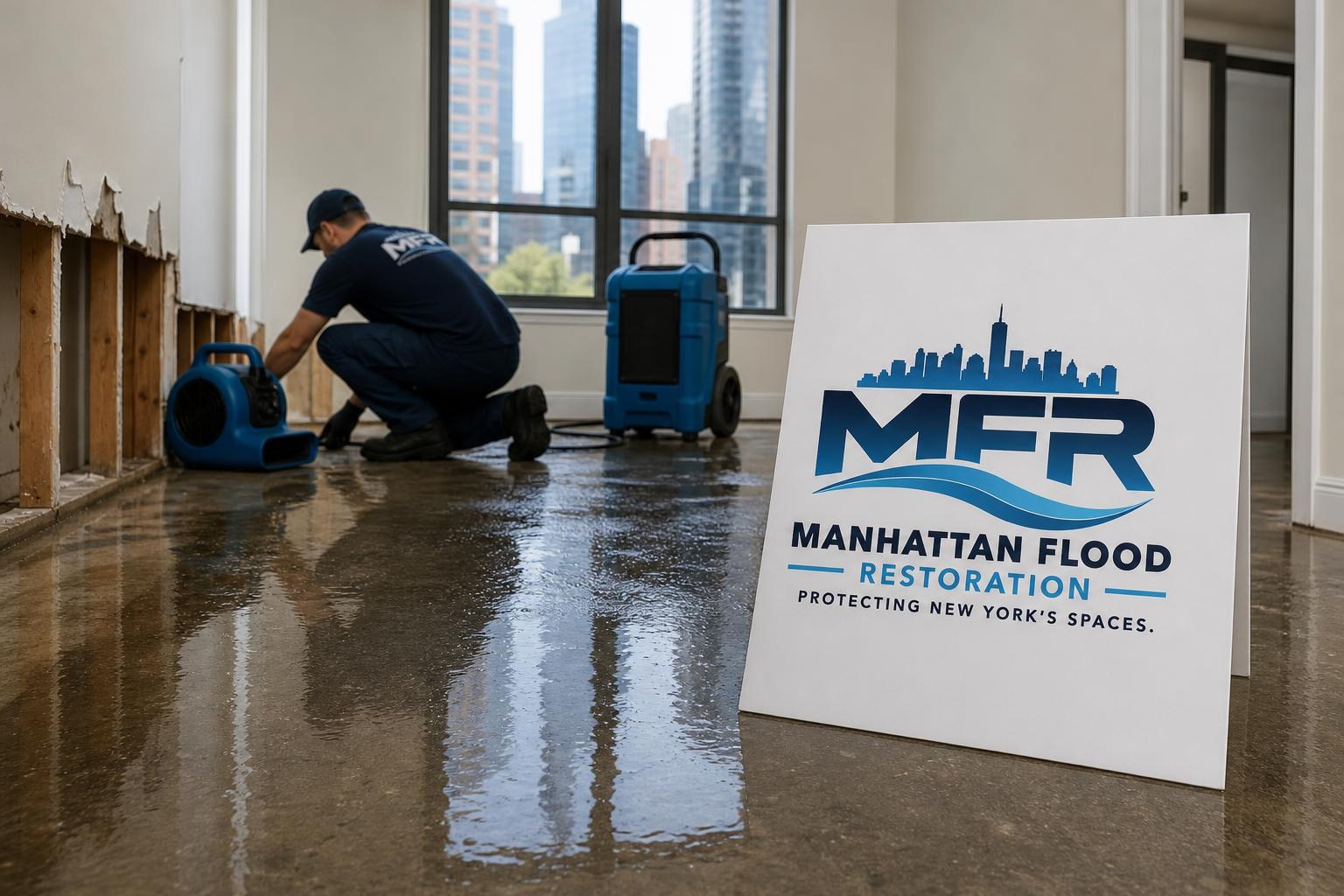
- Structural drying. Air movers and dehumidifiers are placed based on room size and moisture load. Specialty systems can dry wall cavities and hardwood floors without tearing them out.
- Daily monitoring. Readings are taken and logged until materials reach their dry standard.
- Cleaning and antimicrobial treatment. Surfaces are sanitized, especially after gray or black water.
- Repairs and reconstruction. Drywall, flooring, paint, and trim are replaced or restored.
Most residential drying jobs take three to five days, though dense materials like plaster, concrete, and thick hardwood can take longer. Be wary of a crew that removes equipment after 24 hours without showing you readings that confirm the space is dry. Leftover moisture inside a wall is exactly how mold problems start.
Specialized Solutions for NYC Property Types
A two-bedroom condo in a Hudson Yards tower, a four-story brownstone in Park Slope, and a basement retail space in Chinatown all need water damage handled differently. The drying science is the same, but access, materials, regulations, and the number of people affected vary widely. A strong restoration partner adapts its approach to the building rather than running the same playbook everywhere.
High-Rise Apartment and Condo Mitigation
In high-rises, water rarely stays in one unit. A failed toilet supply line on the 20th floor can affect units on the 19th, 18th, and below, and every affected owner may have a different insurer. Coordination becomes as important as drying.
Look for a company that can work directly with building management, schedule freight elevator time, comply with house rules on noise and work hours, and keep separate documentation for each affected unit. Moisture mapping across multiple floors helps determine where water originated, which matters when several insurance policies and a condo or co-op board are involved. Manhattan Flood Restoration regularly handles these multi-unit situations and can communicate with managing agents so owners aren’t left relaying information between parties.
Historic Brownstone and Landmark Preservation
Brownstones and rowhouses often have original plaster walls, decorative moldings, old-growth wood floors, and masonry that holds moisture for a long time. Ripping out and replacing these elements is expensive, and in a landmarked district, exterior work may require approval from the Landmarks Preservation Commission.
The right approach favors controlled, gradual drying over demolition. Plaster can often be dried in place, and hardwood can sometimes be saved with specialized floor-drying mats if the job starts quickly. Ask any contractor whether they’ve worked on prewar homes and how they decide what to save versus remove.
Subterranean and Basement Flood Management
Basements and below-grade spaces take the brunt of flash floods and sewer backups. That water is usually Category 3, which means porous materials like drywall, insulation, and carpet typically need to be removed, and the space needs thorough disinfection before rebuilding.
Basement flooding also raises safety issues: electrical panels, boilers, and water heaters often sit at the lowest level. After cleanup, ask about prevention, including backwater valves, sump pumps, and raising mechanical equipment. If tenants live below grade, confirm the unit is legal and safe before anyone moves back in.
Mold Remediation and Long-Term Structural Health
Water damage that isn’t fully dried tends to come back as mold, sometimes months later. Behind a freshly painted wall, mold can grow quietly until someone notices a musty smell, staining, or respiratory complaints from occupants. That’s why the drying phase described earlier matters so much: proper mitigation is the cheapest mold prevention you’ll ever buy.
When mold does appear, the work becomes a separate, regulated process. In New York State, projects above the state’s size threshold require a licensed mold assessor to write a remediation plan, a licensed remediation contractor to carry it out, and a post-remediation clearance by an assessor independent of the remediator. Containment, negative air pressure, HEPA filtration, and careful removal of affected materials all prevent spores from spreading to clean areas.
For landlords, the stakes go beyond property damage. New York City’s Local Law 55 requires owners of certain residential buildings to address indoor allergen hazards, including mold, and to fix the underlying moisture source rather than just cleaning visible growth. Painting over mold or spraying bleach doesn’t meet that obligation and won’t hold up if a tenant files a complaint.
A few warning signs that a moisture problem hasn’t been resolved:
- A persistent musty odor, especially after rain or when heating kicks on
- Bubbling paint, soft drywall, or warped baseboards near a previous leak
- Recurring condensation on windows or pipes
- Respiratory complaints that improve when occupants leave the space
If you notice any of these, get moisture readings before assuming the problem is cosmetic. Catching hidden moisture early protects the building’s structure and its resale value.
Navigating Insurance Claims in the Five Boroughs
Insurance is where many water damage recoveries stall. The first thing to understand is the coverage split: standard homeowners, renters, and commercial property policies typically cover sudden and accidental water damage, like a burst pipe, but exclude flooding from rising surface water. Flood coverage usually requires a separate policy, often through the National Flood Insurance Program. Sewer backup coverage is frequently an add-on endorsement, and many owners discover they don’t have it only after a storm.
In co-ops and condos, responsibility gets layered. The building’s master policy may cover common elements and structure, while the unit owner’s policy covers interior improvements and personal property. Your proprietary lease, bylaws, or offering plan determines who pays for what, so pull those documents early.
Practical steps that protect your claim:
- Document before cleanup. Take photos and video of the water, the source, and damaged items. Then let mitigation start; delays can be treated as failing to prevent further damage.
- Notify your insurer promptly. Most policies require timely notice.
- Keep damaged items until the adjuster sees them, or document them thoroughly if they must be discarded for health reasons.
- Save every receipt for emergency repairs, hotel stays, and replacement essentials.
- Request drying logs from your restoration company. Daily moisture readings show the work was necessary and properly completed.
A restoration company experienced with New York claims can communicate directly with adjusters and provide estimates in the formats insurers commonly use. That doesn’t mean they control your claim. You’re still the policyholder, and you should read anything before signing, especially agreements that assign insurance benefits to the contractor.
Eco-Friendly and Sustainable Restoration Practices
Restoration generates a lot of waste. Drywall, carpet, padding, and cabinetry often end up in a dumpster after a flood, and a large commercial job can fill several. More property owners, particularly commercial landlords and institutional managers with sustainability commitments, are asking how restoration contractors limit that impact.
The most meaningful sustainable practice is simply saving more materials. Targeted drying with good moisture mapping often lets technicians keep drywall, hardwood, and plaster that a rushed crew would tear out. Less demolition means less landfill waste, lower reconstruction costs, and shorter displacement for occupants. It’s one of the rare cases where the greener option is also the cheaper one.
Other practices worth asking about include energy-efficient dehumidifiers and air movers, which matter on multi-day jobs running dozens of units, and responsible disposal or recycling of metals and salvageable materials. Water and debris contaminated by sewage, of course, must be handled according to health and safety rules regardless of environmental preferences.
Green Antimicrobial and Disinfection Standards
Antimicrobials are a normal part of water damage cleanup, especially after Category 2 or 3 water, but not all products are equal. Some older approaches relied on harsh chemicals that leave strong residues and odors, which is a real concern in homes with children, pets, or occupants with asthma.
Ask which products a company uses and whether they’re EPA-registered for the intended purpose. Many effective disinfectants now use hydrogen peroxide or botanical active ingredients with lower toxicity. Equally important is application: antimicrobials work on cleaned surfaces and don’t substitute for removing contaminated materials. A responsible crew will explain what they’re applying, where, and how long occupants should stay out of treated areas.
Selecting Your Trusted NYC Restoration Partner
The best time to choose a restoration company is before you need one. When water is pouring through a ceiling, you’ll call whoever answers first, and that’s how owners end up with unlicensed crews, inflated invoices, or half-dried walls. Spend 20 minutes now vetting a provider and save the number somewhere your super, property manager, or family can find it.
When comparing companies, ask these questions directly:
- How quickly can you get a crew to my address at night or on a weekend?
- Are your technicians IICRC-certified, and is your company licensed for mold work in New York State?
- Can you provide a certificate of insurance for my building?
- Will I receive daily moisture readings and photo documentation?
- Have you worked on buildings like mine: high-rises, prewar co-ops, brownstones, or commercial basements?
- How do you work with insurance adjusters, and what will you ask me to sign?
Pay attention to how they answer, not just what they say. Specific, confident responses suggest experience. Vague promises and pressure to sign immediately are red flags.
Finding the best water damage restoration in New York comes down to a handful of things: speed in that first critical day, honest moisture documentation, the right certifications and licenses, and real familiarity with the city’s buildings and rules. Top-rated restoration in NYC for 2027 isn’t about the flashiest equipment. It’s about a crew that dries your property completely, keeps mold from coming back, and makes the insurance process less painful.
If you’re dealing with a burst pipe, flooded basement, sewage backup, or lingering moisture right now, Manhattan Flood Restoration offers 24/7 emergency water extraction, structural drying, and mold remediation for homes and commercial properties across Manhattan and the surrounding area. Call them before the water has a chance to settle in, because in this city, the clock starts the moment the leak does.