Burst pipes on the 14th floor, a sewer backup in a brownstone basement, a kitchen fire that leaves a gray film on every cabinet: water and fire don’t respect lease terms or business hours. In New York City, the first decision after the damage is often the most expensive one: grab a mop and a shop vac, or call someone with a truck full of equipment.
Many property owners guess wrong in both directions. Some pay for a crew to handle a spill a towel could have fixed. Others spend a weekend drying a “small leak” themselves, then find black mold behind the drywall two months later, along with a denied insurance claim and an angry downstairs neighbor.
This guide covers the professional vs. DIY decision for NYC properties in practical terms. It explains which situations a capable owner can handle, which ones carry hidden risks, and how building codes, insurance requirements, and equipment shape the choice. If you manage a co-op, own a mixed-use building, or rent out a single unit in Queens, the same principle applies. The visible damage is rarely the whole story, and knowing when to call restoration experts protects both your property and your wallet.
The High Stakes of Property Restoration in New York City
Restoration in New York is harder than in most places because buildings here are stacked, shared, and old. A leak in a single-family ranch house in the suburbs affects one owner. A leak in a prewar Manhattan walk-up can travel through shared plumbing chases, soak a ceiling two floors down, and reach a commercial tenant’s inventory before anyone notices.
Several factors raise the stakes:
- Building age. A large share of the city’s housing stock was built before 1940. Plaster-and-lath walls, original cast-iron drain lines, and old wood framing absorb water differently from modern materials and often hide hazardous materials such as lead paint or asbestos.
- Density and liability. Water moves down and sideways. In a co-op or condo, damage to your unit can quickly become damage to the board’s common elements and your neighbors’ property, which complicates responsibility and claims.
- Cost of downtime. For a restaurant, a medical office, or a retail tenant, every day closed costs money. For landlords, an uninhabitable apartment can mean lost rent and possible violations.
- Regulatory oversight. NYC adds its own layer of rules, including housing maintenance obligations for landlords and licensing requirements for certain kinds of remediation work.
Speed also matters more than people expect. Water that sits for a day or two starts wicking into subfloors and wall cavities, and mold can begin growing within 24 to 48 hours under the right conditions. In a city where getting a contractor into a building may require board approval, a certificate of insurance, and freight elevator scheduling, delays compound quickly. The decision you make in the first few hours often determines whether you face a simple cleanup or a full gut renovation.
Evaluating Damage: Minor Repairs vs. Structural Hazards
The useful question isn’t “how bad does it look?” It’s “how far did it go, and what did it touch?” A tablespoon of water that sat inside a wall for three weeks is more dangerous than a gallon spread across a tile floor and wiped up in ten minutes. Before deciding on a response, figure out the source, the duration, the materials affected, and whether the water was clean.
Identifying Hidden Water Intrusion
Water is very good at hiding. It runs along joists, collects under floating floors, and soaks the backs of cabinets while the surface looks dry. Signs that moisture has gone deeper than you can see include:
- Paint that bubbles, peels, or looks slightly puffy
- Baseboards separating from the wall or swelling at the bottom
- Hardwood boards cupping (edges higher than the center)
- A musty smell that persists after the surface dries
- Ceiling stains that grow or darken over several days
- Soft spots when you press on drywall
Water category matters as much as quantity. Clean water from a supply line is the least risky. Gray water from a dishwasher or washing machine carries contaminants. Black water, which includes sewage backups and floodwater from outside, should never be handled as a DIY job. If your basement took in water during a storm surge or a street flooding event, assume it’s contaminated.
Assessing Fire and Smoke Residue
Fire damage looks obvious, but smoke is the sneaky part. Soot particles are small enough to travel through HVAC systems, settle inside wall outlets, and embed in porous materials across rooms the flames never reached. Protein fires from cooking leave an almost invisible greasy film with a strong odor, while synthetic materials produce sticky, acidic residue that can etch metals and glass if left too long.
There’s also a water component. Firefighters often use large volumes of water, so a fire-damaged unit is frequently a water-damaged unit as well, along with the apartments below it. Any fire that involved more than a contained stovetop flare-up deserves a professional assessment, if only to check for structural charring and moisture you can’t see.
When DIY Methods are Safe and Effective
Not every wet floor calls for an emergency crew. Plenty of situations are well within a reasonable owner’s ability, and handling them yourself saves money and hassle. DIY generally makes sense when all of the following are true:
- The water came from a clean source, such as a supply line, sink overflow, or leaking water heater.
- You caught it quickly, ideally within a few hours.
- The affected area is small, roughly a single room or less, and confined to the surface.
- Only non-porous or easily removable materials got wet: tile, sealed concrete, vinyl, area rugs you can take outside.
- Nothing in the ceiling or walls shows signs of saturation.
If your situation fits, act fast. Shut off the water source and, if water is near outlets or appliances, the electricity to that area. Extract standing water with a wet vacuum or towels, then move furniture off wet surfaces and prop it on blocks or foil to prevent staining. Open windows if the weather is dry, run fans across the surface, and use a household dehumidifier with the door closed so it pulls moisture from the room instead of the whole apartment.
Small mold spots on hard surfaces, such as a bit of mildew on bathroom grout, are also fair game. Scrub with detergent and water, dry thoroughly, and fix the ventilation problem that caused it.
The honest limit of DIY is verification. A household fan dries what you can see, but without a moisture meter you’re guessing about what’s going on under the floor. A cheap pin-type meter costs less than a dinner out and gives you real readings. If numbers stay elevated after two or three days of drying, that’s your signal to bring in help.
The Risks of Improper Self-Restoration
The most common mistake in self-restoration isn’t doing something wrong: it’s stopping too early. A floor feels dry to the touch, the fans go back in the closet, and the moisture trapped underneath keeps working. Problems from incomplete drying tend to appear weeks or months later, when they’re harder to trace and more expensive to fix.
Health Hazards of Mold and Pathogens
Mold doesn’t need standing water. It needs moisture, organic material like drywall paper or wood, and time. Once colonies establish inside a wall cavity, disturbing them by tearing out drywall without containment can spread spores throughout an apartment or into shared building air. People with asthma, allergies, or weakened immune systems are especially vulnerable, and in multi-family buildings, a landlord’s remediation mistakes can affect tenants who never had a leak themselves.
Sewage and floodwater bring a separate set of dangers. They can carry bacteria, viruses, and parasites, along with chemicals picked up from streets and storage areas. Cleaning that kind of contamination safely requires protective gear, proper disposal of porous materials like carpet and drywall, and antimicrobial treatment. Bleach and a mop won’t cut it, and attempting the job without protection puts your health at real risk.
Long-term Structural Compromise
Wood framing that stays damp long enough can rot and lose strength. Subfloors delaminate, joists weaken, and in older buildings, repeated moisture exposure can degrade plaster keys and masonry mortar. Metal components rust, including fasteners and electrical boxes that sit behind finishes where no one checks them.
There’s a financial angle, too. Insurers often distinguish between sudden accidental damage and long-term deterioration. If a hidden problem surfaces months later and an adjuster concludes it resulted from inadequate mitigation, you may find yourself paying for repairs out of pocket that would have been covered had the original drying been done and documented properly.
Navigating NYC Building Codes and Compliance
New York City has rules that turn some restoration jobs from a weekend project into a regulated activity. These requirements are easy to overlook in the middle of an emergency, but they carry real consequences for owners and landlords.
Mold is the clearest example. New York State’s mold licensing law requires licensed assessors and remediators for mold projects above 10 square feet. In NYC, Local Law 55 places obligations on owners of residential buildings with three or more units to address indoor allergen hazards, including mold, and Local Law 61 sets work practice and licensing standards for mold remediation in larger residential buildings. A landlord who handles a significant mold problem with an untrained handyman may face violations on top of the remediation cost. Requirements change and vary by building type, so confirm current rules with the city or a licensed professional before work begins.
Other compliance issues to keep in mind:
- Asbestos and lead. Many older NYC buildings contain asbestos in plaster, pipe insulation, or floor tiles, and lead paint in pre-1960 construction. Tearing out water-damaged materials can disturb these hazards, and NYC has specific rules for testing and abatement.
- Permits. Structural repairs, plumbing replacement, and electrical work generally require licensed professionals and, in many cases, Department of Buildings permits.
- Co-op and condo alteration agreements. Boards often require contractor insurance certificates, approved work hours, and sign-off before anyone opens a wall.
A reputable restoration company will know these requirements and coordinate with licensed trades where needed. For property managers handling several buildings, this alone can justify the call.
The Professional Advantage: Specialized Equipment and Expertise
The difference between professional and DIY drying isn’t effort: it’s physics. A household fan moves air across a surface. Professional drying controls temperature, humidity, and airflow together to pull moisture out of materials, then proves it worked with measurements. Comparing a shop vac to a truck-mounted extraction unit is like comparing a garden hose to a fire engine.
Industrial-Grade Dehumidification and Air Scrubbing
Commercial low-grain refrigerant and desiccant dehumidifiers remove far more water per day than a consumer unit, and they keep working in conditions where household models stall. Restoration crews pair them with high-velocity air movers aimed to create airflow across wet surfaces, and they sometimes inject dry air directly into wall cavities or under hardwood floors to dry materials in place rather than tearing them out.
Air scrubbers with HEPA filtration address the air itself. During mold remediation or sewage cleanup, they capture spores and particulates and, combined with plastic containment and negative air pressure, keep contamination from spreading into hallways or neighboring units. In a shared building, that containment protects other residents and limits your liability.
Thermal Imaging and Moisture Mapping
Thermal cameras detect temperature differences on surfaces, and because evaporating moisture cools materials, wet areas often show up clearly on screen even when the wall looks fine. Technicians confirm those readings with penetrating and non-penetrating moisture meters, then map the affected area and track readings daily until materials reach drying goals.
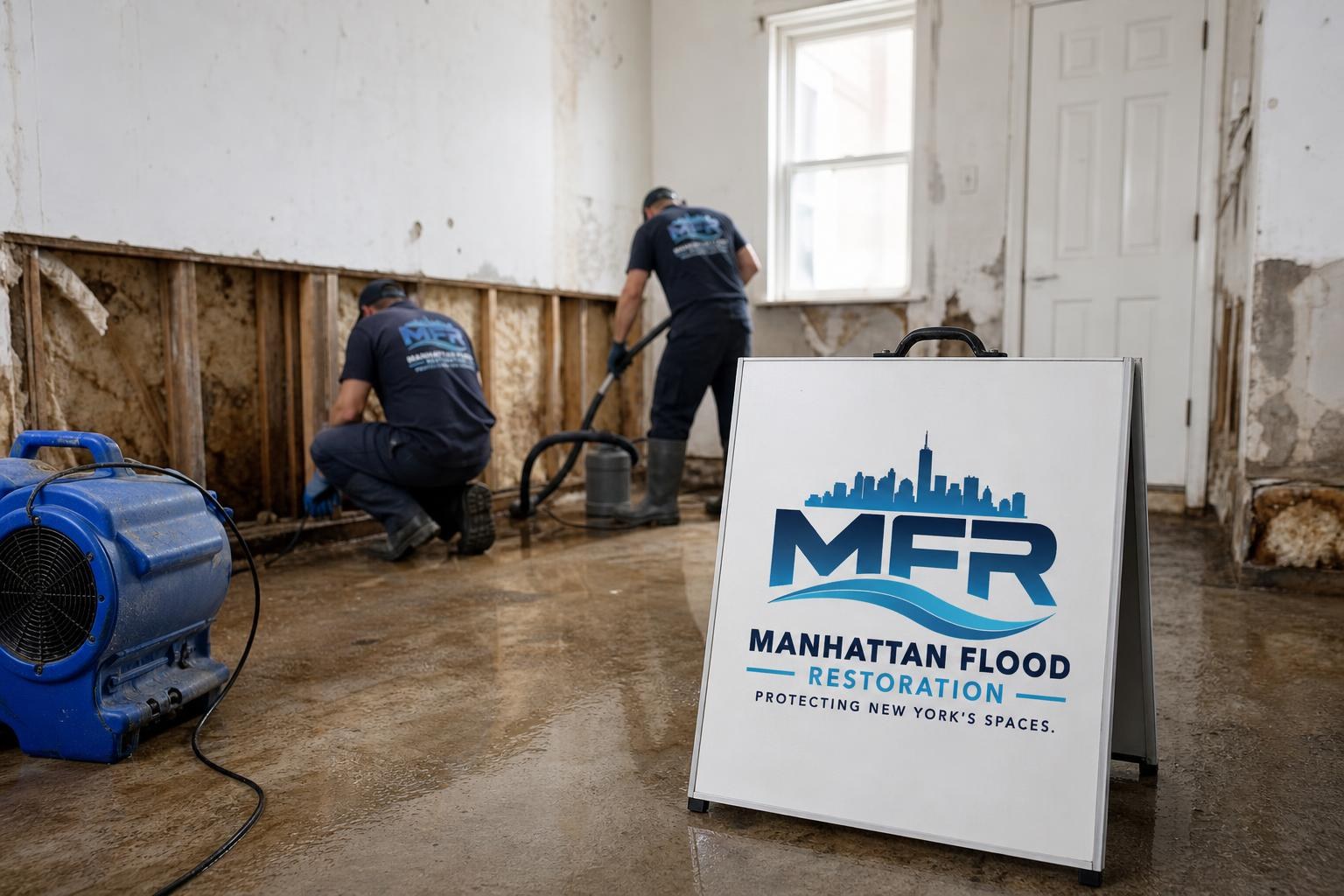
That map is more than a diagnostic tool. It shows exactly where water traveled, which helps avoid unnecessary demolition, and it creates a record that drying was completed. Teams like Manhattan Flood Restoration use moisture detection at the start of a job to define its scope and at the end to confirm it’s finished, which is the kind of proof that matters when a buyer, board, or insurer asks questions later.
Streamlining Insurance Claims with Restoration Experts
Insurance is where many DIY efforts quietly fall apart. Most property policies require you to take reasonable steps to prevent further damage after a loss, which is called mitigation. Failing to mitigate, or failing to prove you did, can give an insurer grounds to reduce or deny parts of a claim. Owners who dry things themselves often do reasonable work but have nothing to show for it beyond a few phone photos.
Restoration companies that work regularly with insurers understand how adjusters think. They know what evidence supports a claim for sudden pipe failure versus what looks like long-term leakage, and they can describe damage in the line-item terms adjusters use. Many will communicate directly with the adjuster, which takes a stressful back-and-forth off your plate during an already disruptive week. That said, read your policy carefully and remember that you, not the contractor, are the policyholder.
Documentation Requirements for NYC Insurers
Requirements vary by carrier and policy, but a strong claim file typically includes:
- Date-stamped photos and video of the damage before any cleanup begins, plus the source of the loss
- Moisture readings taken at the start and recorded daily through the drying process
- An itemized list of damaged contents with approximate age and value
- Equipment logs showing what was used, where, and for how long
- Invoices and receipts for emergency services and any items you purchased
- Removed materials kept or photographed if the adjuster hasn’t yet inspected them
In multi-unit NYC buildings, add records showing where the water originated and which units were affected, because the building’s master policy, your unit-owner policy, and a neighbor’s policy may all be involved. Keep copies of any communication with your managing agent or board.
Selecting the Right NYC Restoration Partner for Your Property
The best time to choose a restoration company is before you need one. Property managers in particular benefit from having a vetted provider on file, so the 2 a.m. call from a superintendent leads to a crew instead of a frantic search. When comparing companies, ask:
- Do they offer true 24/7 emergency response, and how quickly can they arrive in your borough?
- Are their technicians trained and certified in water damage restoration and mold remediation, and do they hold the licenses New York requires for mold work over 10 square feet?
- Can they provide a certificate of insurance that meets your building’s or board’s requirements?
- Do they document moisture readings and share them with you and your insurer?
- Will they explain the scope of work in writing before major demolition?
Watch for red flags: pressure to sign an assignment of benefits on the spot, vague estimates, or a promise to have everything dry in a day regardless of conditions. Good contractors explain their reasoning and show you the readings.
So when should you handle it yourself? Small, clean-water spills caught quickly on non-porous surfaces are reasonable DIY territory, especially with a moisture meter to confirm the results. Anything involving sewage or floodwater, hidden moisture, fire and smoke, mold larger than a small patch, older building materials, or neighboring units belongs with professionals. The real cost of a restoration job is rarely the first invoice: it’s the mold, rot, or denied claim that shows up later.
If you’re facing water damage, flooding, a sewage backup, or mold in Manhattan or anywhere in NYC, Manhattan Flood Restoration provides emergency water extraction, structural drying, moisture detection, and mold remediation for homes and commercial properties. Call before a small leak becomes a big renovation: the hours right after the damage are the ones you can’t get back.