When water starts pouring through a ceiling in a Manhattan co-op, the clock starts immediately. Within minutes, it can travel through floor joists, down wall cavities, and into the apartment below. By the next morning, drywall that looked fine may be soft to the touch, and by the second or third day, mold can begin colonizing hidden surfaces. That is why fast response water damage restoration in NYC matters so much: the gap between a manageable cleanup and a gut renovation is often measured in hours, not weeks.
New York adds its own complications. Buildings are old, units are stacked tightly, and a leak in one apartment rarely stays in one apartment. Property managers have boards, tenants, and insurers to answer to. Homeowners in brownstones deal with basements that sit below street level, and commercial tenants lose revenue every hour their doors stay closed.
What follows is a practical walkthrough for property owners, managers, and real estate professionals: what causes these emergencies, what to do in the first hour, how professional restoration actually works, and how to choose a team you can trust at 3 a.m.
The Critical Need for Rapid Water Damage Response in NYC
Water damage behaves differently in a city where most people live and work in shared structures. A supply line failure on the 12th floor of a prewar building can affect six units below it before the super finds the shutoff valve. Every additional hour of saturation expands the scope of work, the number of parties involved, and the eventual cost.
The damage also escalates in predictable stages. In the first few hours, water soaks into carpet, pads, and the bottom edges of drywall. Within a day, wood flooring starts to cup, paint bubbles, and particleboard furniture swells. After 24 to 48 hours, the conditions for mold growth are in place, which is the timeframe the EPA and most restoration standards cite. Past that point, materials that could have been dried in place often need to be removed.
There is a financial side too. Insurers generally expect policyholders to take reasonable steps to limit further damage. If a leak sits untreated over a long weekend and mold develops, the adjuster may question whether that additional damage was preventable. Fast mitigation protects both the building and the claim.
For commercial properties, the stakes include lost business. A flooded restaurant, retail store, or medical office in Midtown cannot simply operate around wet floors and dehumidifiers. Getting extraction and drying started quickly is often the difference between a short closure and a month of downtime.
The practical lesson is simple: speed is not a luxury in this industry. It is the single biggest factor you control after the water shows up.
Common Causes of Emergency Water Damage in New York City
Most water emergencies in the five boroughs fall into a handful of categories. Knowing which one you are dealing with affects safety precautions, cleanup methods, and insurance coverage.
Burst Pipes and Aging Infrastructure
A large share of Manhattan’s housing stock was built before World War II, and much of it still runs on original or partially updated plumbing. Galvanized steel pipes corrode from the inside, cast iron drain stacks crack, and old joints loosen after decades of pressure changes. These failures often happen without warning, and they tend to happen inside walls where nobody sees them until a stain appears.
Winter makes things worse. Pipes along exterior walls, in unheated basements, or near drafty windows can freeze during cold snaps, and the expansion splits the pipe. The real flooding usually begins when temperatures rise and the ice thaws. Radiator valves, steam heating systems, washing machine hoses, dishwasher lines, and toilet supply lines round out the most frequent culprits in apartments.
Sewage backups deserve their own mention. When a building’s main line clogs or the municipal system becomes overwhelmed, wastewater can come up through basement floor drains and toilets. This is contaminated water and requires a different level of protective equipment and disinfection.
Flash Flooding and Storm Surges
New York has learned hard lessons about storm water. Hurricane Sandy in 2012 flooded lower Manhattan, Red Hook, and the Rockaways with storm surge, and the remnants of Hurricane Ida in 2021 showed how quickly intense rainfall can overwhelm the city’s sewer capacity. Basement apartments were especially vulnerable in both events.
Flash floods do not need a named storm. A short, heavy downpour can send water down subway stairs, through basement doors, and up through floor drains as the combined sewer system backs up. Low-lying neighborhoods and properties with below-grade spaces face the highest risk, and floodwater should always be treated as contaminated.
Immediate Steps to Take Before the Restoration Team Arrives
The first hour matters, but your safety matters more. Here is what to do, roughly in order, once you discover water damage:
- Stop the source if you safely can. Close the fixture valve or the unit’s main shutoff. In larger buildings, call the super or building management right away, since riser shutoffs are often locked or in mechanical rooms.
- Cut power to affected areas. If water is near outlets, electrical panels, or appliances, switch off the relevant breakers. If you would have to stand in water to reach the panel, do not touch it. Call an electrician or the utility instead.
- Alert neighbors and management. Notify units directly below and beside you. Water travels faster than most people expect, and early warning lets neighbors move belongings and check their ceilings.
- Document everything. Take photos and video of the water, the source, damaged items, and ceiling stains before anything is moved. Timestamped images are extremely helpful for insurance.
- Move valuables and electronics. Lift items off wet floors, place aluminum foil or wood blocks under furniture legs, and move rugs, documents, and artwork to dry rooms.
- Remove standing water where it’s clean and shallow. Towels, mops, and a wet/dry vacuum can help with a small clean-water leak. Do not attempt this with sewage or floodwater.
- Call a restoration company and your insurer. Report the loss promptly and get professionals on site.
A few things to avoid: do not use a household vacuum on wet surfaces, do not turn on ceiling fixtures if the ceiling is sagging or wet, and do not enter a flooded basement with standing water above outlet height. If a ceiling is bulging with trapped water, keep people out of the room.
Also resist the urge to just turn on a few fans and call it handled. Surface drying often leaves moisture trapped behind baseboards and under flooring, which is exactly where mold gets started.
The Professional Water Damage Restoration Process
Professional restoration follows a sequence. Skipping or rushing a stage usually means problems come back months later, so it helps to understand what a qualified crew should be doing.
Advanced Moisture Detection and Assessment
The visible water is rarely the whole story. Technicians use moisture meters, thermal imaging cameras, and hygrometers to map how far water has spread into walls, subfloors, insulation, and ceiling cavities. In a high-rise, this often means checking units below and tracing water along pipe chases.
The assessment also classifies the water. Clean water from a supply line is handled differently from gray water (washing machine or dishwasher discharge) or black water (sewage, river flooding). That category determines what can be salvaged, what must be removed, and what protective gear the crew needs. A good team writes this down and shares a moisture map with you, which also becomes useful documentation for your insurer.
Industrial Water Extraction and Structural Drying
Extraction removes the bulk of the water with truck-mounted or portable pumps and weighted extraction tools that pull moisture out of carpet and padding. Removing as much liquid water as possible up front dramatically shortens drying time.
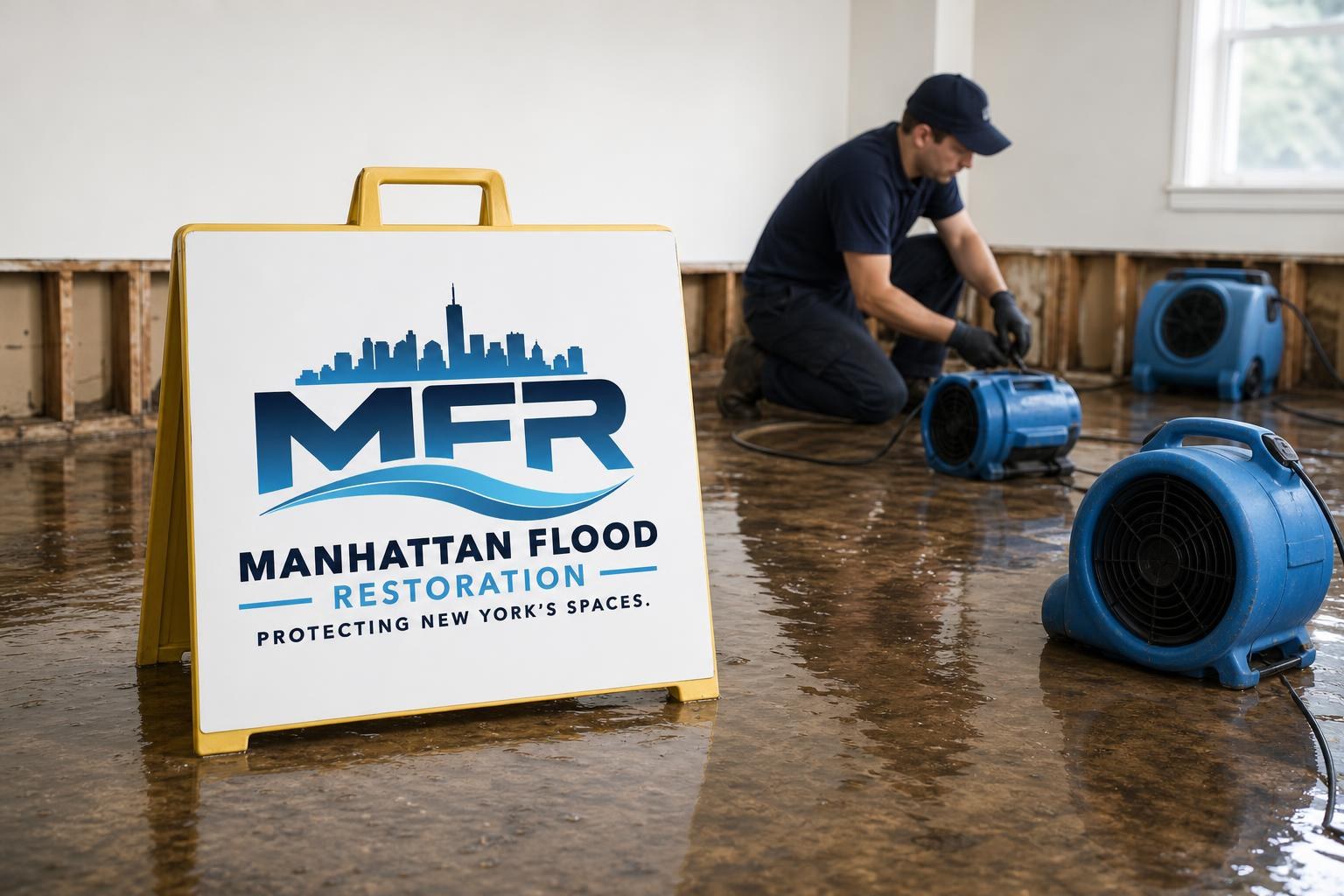
Then comes structural drying, which is a science more than a guess. Crews place air movers to circulate air across wet surfaces and commercial dehumidifiers to pull moisture out of the air. Wall cavities may be dried through small holes near the baseboard rather than by tearing out drywall. Technicians take readings daily and adjust equipment until materials reach their normal dry standard. Most drying projects take several days, depending on materials and how long the water sat.
Sanitization and Odor Removal
Once materials are dry, surfaces get cleaned and treated with antimicrobial products, especially after gray or black water exposure. Contaminated porous items like carpet pad, insulation, and soaked drywall are typically removed and discarded.
Odor removal targets the musty smell that lingers after water damage. Depending on the source, this can involve HEPA air scrubbers, thermal fogging, or other deodorization methods. Masking a smell with air freshener is not the same as eliminating its cause.
Preventing Mold Growth Following a NYC Flood Event
Mold needs three things: moisture, organic material, and time. A flooded apartment provides plenty of the first two. Drywall paper, wood framing, carpet backing, and cardboard boxes are ideal food sources. The only variable you really control is how fast the moisture goes away.
That 24 to 48 hour window is why fast response matters so much. Mold spores are always present in indoor air, and they activate when surfaces stay damp. In a humid New York summer, with windows closed and window units cycling, damp materials can stay wet much longer than people expect.
Several practical steps reduce your risk after any flood:
- Dry to a measured standard, not by feel. Wood and drywall can feel dry on the surface while holding moisture inside. Ask your restoration team for final moisture readings.
- Remove what can’t be saved. Saturated insulation and carpet padding exposed to contaminated water should go. Trying to salvage them usually backfires.
- Control indoor humidity. Keep relative humidity below roughly 50 percent in the weeks after a flood. A portable dehumidifier helps in basements and below-grade units.
- Watch for warning signs. Musty odors, discoloration on baseboards, or peeling paint weeks after the event are signals to call for an inspection.
New York City also has specific rules. Local Law 55 requires landlords of certain residential buildings to address indoor allergen hazards, including mold, and larger mold jobs in multi-unit buildings may need licensed mold assessors and remediators under New York State’s mold licensing law. Property managers should confirm their contractors carry the right credentials before work begins.
If mold has already developed, Manhattan Flood Restoration handles mold remediation with containment and HEPA filtration so spores don’t spread to clean areas of the building during removal.
Navigating Insurance Claims for Urban Water Damage
Insurance is where many New Yorkers get blindsided. Coverage depends heavily on the cause of the water, and the distinction catches people off guard.
Standard homeowners, condo, and renters policies generally cover sudden and accidental water damage, such as a pipe that bursts or a washing machine hose that splits. They typically do not cover gradual leaks that went unrepaired for months, and they almost never cover flooding from outside, like storm surge or rising surface water. Flood coverage usually requires a separate policy through the National Flood Insurance Program or a private carrier. Sewer backup is often excluded unless you added a specific endorsement.
Shared buildings add another layer. In a co-op or condo, the building’s master policy may cover common elements and structure, while the unit owner’s policy covers interior finishes, improvements, and personal property. When water comes from a neighbor’s unit, liability may fall on that owner’s insurer. These overlapping claims can take a while to untangle.
A few habits make the process smoother:
- Report the loss quickly and get a claim number.
- Keep your photos, videos, and receipts organized in one place.
- Save samples of damaged materials, like a piece of carpet or flooring, if the adjuster hasn’t seen them yet.
- Request the moisture logs and drying reports from your restoration company.
- Don’t sign off on a final settlement until hidden damage has been assessed.
Restoration companies that document moisture readings, photograph each stage, and use industry-standard estimating software make adjusters’ jobs easier. That documentation is often what gets a claim paid without long disputes.
Restoring NYC Properties to Pre-Loss Condition
Mitigation stops the damage. Restoration puts the space back together. For many property owners, this second phase is where the real disruption shows up, so it pays to understand what’s involved.
Repairing Hardwood Floors and Drywall
Hardwood floors are common in New York apartments, and they react badly to water. Boards absorb moisture and cup, with edges rising higher than centers. If drying begins quickly, many floors can be saved using specialized floor drying mats that pull moisture up through the wood. Once they stabilize, the floor may need sanding and refinishing to look right again. Floors that sat wet too long, or that buckled off the subfloor, generally need partial or full replacement.
Drywall follows a simpler rule. Clean-water damage caught early can often be dried in place. Drywall that has swollen, crumbled, or been exposed to sewage or floodwater gets cut out, typically a couple of feet above the waterline, and replaced. Crews then tape, mud, prime, and paint so the repair blends with existing walls. In prewar buildings with plaster walls, repairs often require skilled plasterers rather than standard drywall installers, which is something to ask about up front.
Final Safety Inspections and Structural Checks
Before a space is handed back, it should be checked for problems that aren’t obvious. Electrical systems that got wet need inspection by a licensed electrician before power is fully restored. Subfloors and joists should be checked for rot or weakness, especially after prolonged leaks.
Final moisture readings confirm that the drying goal was reached. Some property owners also order post-remediation air testing if mold was involved. For landlords, keeping these inspection records protects you if a tenant raises health or safety concerns later.
Choosing a Reliable 24/7 NYC Restoration Partner
The worst time to research restoration companies is while water is coming through your ceiling. Property managers and owners are better off picking a partner in advance and keeping their number with building emergency contacts. The best fast response water damage restoration teams in NYC share a few qualities worth checking for.
Here is what to look for:
- Genuine around-the-clock availability. A real person should answer at 2 a.m., and a crew should be dispatched promptly. Ask what their typical arrival time is in your neighborhood.
- IICRC-certified technicians. The Institute of Inspection, Cleaning and Restoration Certification sets the main industry standards for water damage and mold work.
- Proper licensing and insurance. Confirm general liability coverage and, for mold work, New York State mold licensing.
- Experience with NYC buildings. Working in a walk-up, a doorman tower, or a commercial space each comes with building rules, certificates of insurance, freight elevator bookings, and board requirements.
- Thorough documentation. Moisture maps, daily readings, and photos should be standard, not something you have to request.
- Insurance familiarity. A good company will work directly with your adjuster and explain what’s being billed and why.
Be cautious of companies that pressure you to sign assignment-of-benefits paperwork on the spot, that can’t explain their drying plan, or that quote a price before seeing the damage.
Manhattan Flood Restoration was built around exactly these emergencies: burst pipes, sewage backups, storm flooding, and the mold problems that follow when water sits too long. The team handles emergency extraction, structural drying, moisture detection, sewage cleanup, odor elimination, and repair of damaged walls, floors, and ceilings for both residential and commercial properties across Manhattan and the surrounding areas.
The pattern across every section of this guide is the same: the faster water is stopped, extracted, and dried, the less you lose. Quick action limits how far water spreads, keeps mold from taking hold, strengthens your insurance claim, and shortens the time your home or business is out of commission. Knowing the common causes helps you prevent the next incident, and knowing what proper restoration looks like helps you spot a contractor cutting corners.
So do one thing today: save the number of a restoration company you trust in your phone and share it with your super, building manager, or tenants. If you’re dealing with water damage right now, contact Manhattan Flood Restoration for 24/7 emergency response and get drying started before the damage spreads any further.