Water rarely announces itself in New York. It shows up as a brown stain spreading across your ceiling at 2 a.m., or a puddle under the dishwasher that turns out to be a slow leak running for weeks. For property owners trying to find affordable water damage restoration in NYC, the first few hours often decide whether the repair bill stays manageable or grows into something much larger.
The good news is that “affordable” and “done right” don’t have to be opposites. Most of the money people lose on water damage comes from delay, guesswork, and paying for the wrong work, not from hiring professionals. Understanding how restoration is priced, what a proper job involves, and where costs tend to hide puts you in a far stronger position. That applies whether you own a brownstone in Harlem, manage a rental building in Queens, or run a storefront in Midtown.
What follows is a practical look at how water damage plays out in this city, what drives the price, how to keep insurance and mold from turning a bad week into a bad year, and when it makes sense to handle things yourself.
Navigating Water Damage Challenges in New York City
New York’s buildings create water problems you won’t find in most suburbs. A single burst pipe on the ninth floor of a co-op can travel down through four or five units below before anyone shuts off the riser. Older pre-war buildings often have plaster-and-lath walls, cast iron drain lines, and decades of patched plumbing that fail in unpredictable ways.
Weather adds another layer. Heavy summer downpours can overwhelm the city’s combined sewer system in minutes, pushing water into basements and ground-floor apartments in low-lying parts of Brooklyn, Queens, and Lower Manhattan. Winter brings its own risks, with frozen pipes in unheated hallways, vacant units, and exterior walls.
Then there’s the shared-responsibility problem. In a multifamily building, the question of who pays (the unit owner, the board, the upstairs neighbor, or the landlord) can stall action for days. That delay is expensive, because standing water keeps soaking into subfloors, drywall, and insulation the whole time.
The most common sources of water damage in NYC properties include:
- Burst or leaking supply lines under sinks, behind toilets, and in washing machine hookups
- Roof and parapet leaks in older walk-ups and flat-roof buildings
- Sewer backups during heavy rainfall, especially in basements
- Radiator and steam pipe failures in buildings with older heating systems
- Overflowing tubs and appliances in upstairs units
Knowing which of these you’re dealing with matters, because each one carries different contamination risks and different cleanup requirements.
Key Factors Influencing Restoration Costs in the Five Boroughs
Ask three restoration companies for a ballpark price over the phone and you’ll probably get three vague answers. That’s not evasion. Water damage pricing genuinely depends on details nobody can see until they’re standing in the space with a moisture meter.
The biggest variables are the size of the affected area, the category of water involved, how long it has been sitting, and which materials got wet. Clean water from a supply line is far cheaper to deal with than sewage, which requires protective gear, disposal of porous materials, and disinfection. A hardwood floor that got wet two hours ago can often be dried in place, while one that sat for three days may be cupped beyond saving.
Timing is the variable you control most directly. Calling within the first day usually keeps a job in the “dry it out” category rather than the “tear it out and rebuild” category, and that difference can easily be several thousand dollars.
Impact of NYC Building Codes and Architecture
New York City has some of the most detailed building regulations in the country, and they shape restoration costs. Older buildings may contain lead paint or asbestos in plaster, flooring adhesives, or pipe insulation. If water damage requires opening those materials, testing and specialized handling may be required before demolition can proceed.
Architecture matters too. Pre-war buildings with thick plaster walls hold moisture longer than modern drywall, so drying takes more time and more equipment. Co-ops and condos often require contractors to carry specific insurance certificates and follow board-approved work hours, which can extend a project’s timeline.
Labor Rates and Logistics in High-Density Areas
Working in Manhattan isn’t like working in a suburban ranch house. Crews have to deal with parking, loading dock schedules, freight elevator reservations, and buildings that only allow work between certain hours. All of that adds labor time.
Hauling out wet carpet and drywall from a sixth-floor walk-up takes far longer than tossing it in a dumpster in a driveway. Equipment like dehumidifiers and air movers has to be carried in and out. A local company that works these buildings every day tends to price more accurately because it already knows how long these logistics take.
Essential Steps in the Water Mitigation Process
Mitigation is the work that stops damage from spreading. Restoration is the rebuilding that comes afterward. Many people mix up the two, and that confusion leads to bad decisions, like repainting a wall that’s still wet inside or replacing flooring over a damp subfloor.
A proper mitigation job follows a fairly consistent order. First, the source gets stopped. Then a technician inspects and documents the damage, including photos and moisture readings, which becomes important later for insurance. Next come water removal, drying, and verification that everything has actually reached normal moisture levels.
Skipping steps is where cheap jobs become expensive ones. A contractor who rips out drywall without documenting readings first can leave you with a weaker insurance claim. One who pulls equipment after two days because “it feels dry” can leave moisture trapped behind baseboards, where mold will find it.
Emergency Extraction and Structural Drying
Extraction comes first because every gallon removed with a truck-mounted or portable extractor is a gallon that doesn’t have to evaporate. Removing standing water physically is dramatically faster than drying it out with fans.
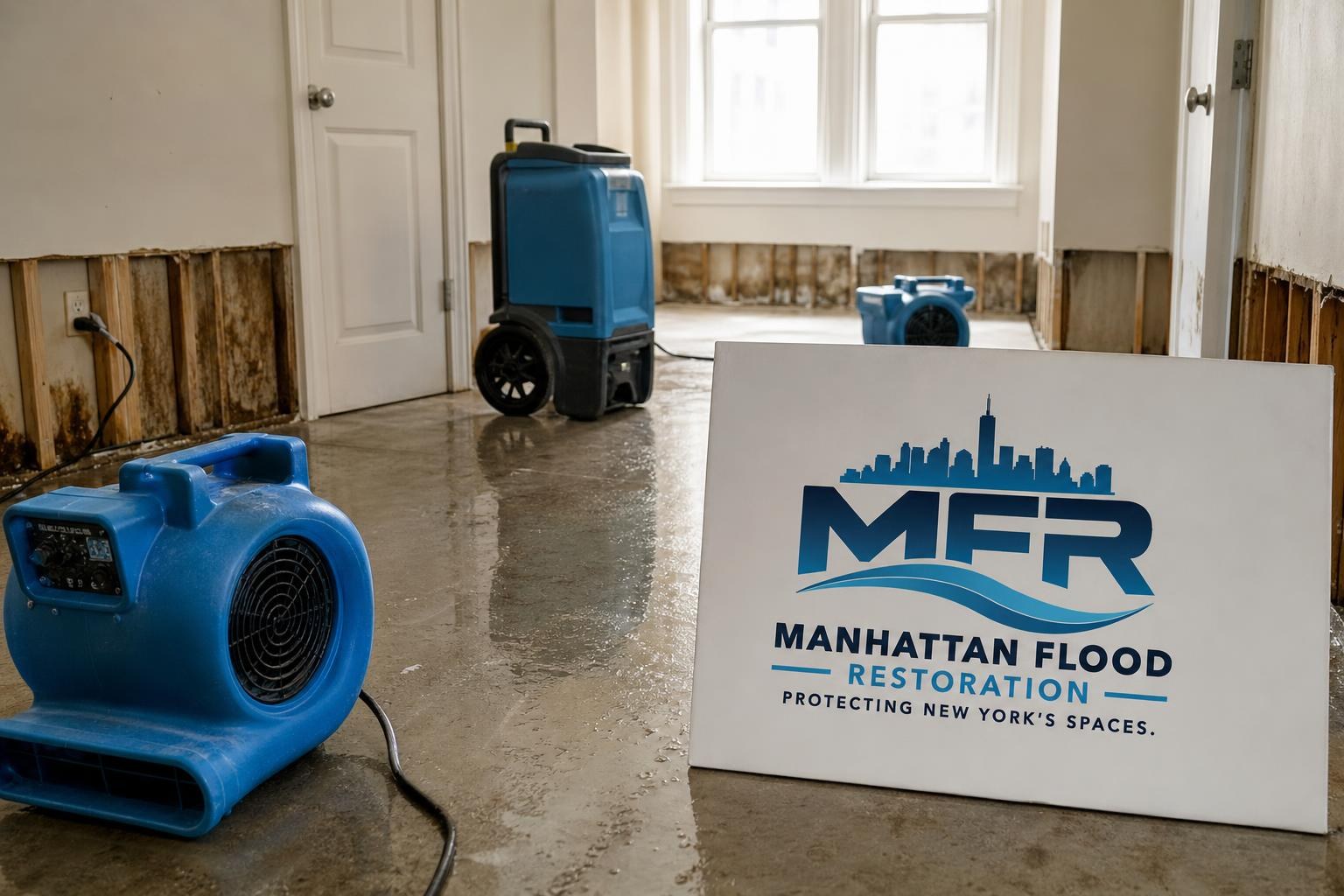
After extraction, structural drying begins. Technicians place air movers to push air across wet surfaces and may drill small holes at the base of walls to dry wall cavities without full demolition. In many cases, carpet pad gets removed while the carpet itself is saved. Hardwood floors may get specialized drying mats. The goal is to save as many original materials as possible, because drying almost always costs less than replacing.
Dehumidification and Moisture Monitoring
Air movers alone just shift moisture from materials into the air. Commercial dehumidifiers pull that moisture out of the room entirely. Without them, a closed apartment can turn into a humid box where water reabsorbs into everything.
Monitoring is the step that separates careful companies from careless ones. A technician should return to take moisture readings at the same marked points, often daily, until materials reach their dry standard. Ask to see those readings. Written drying logs protect you, prove the job was completed, and support your insurance claim.
How to Find Budget-Friendly Restoration Professionals
The cheapest quote is often not the most affordable one. A company that underbids and then underdries can leave you paying for mold remediation six weeks later. Real value comes from a fair price on the right scope of work, done completely the first time.
Start by looking for companies that are local and answer the phone. Water damage is time-sensitive, and a firm that responds within an hour or two in your borough will usually save you more than a firm that’s 15% cheaper but can’t arrive until tomorrow afternoon. Ask how quickly they can be on site and whether they work nights and weekends.
Watch for red flags. Be wary of anyone who pressures you to sign an assignment of benefits on the spot, refuses to provide a written estimate, or recommends tearing out everything before taking any moisture readings. Honest companies explain what they’re doing and why.
When you’re comparing the best options for water damage restoration services across New York, value usually comes down to responsiveness, transparency, and documentation, not just the hourly rate.
Comparing Quotes and Verifying Credentials
When you collect quotes, make sure they cover the same scope. One estimate might include drying equipment for five days while another assumes three. One might include content moving and another might not. Line-item estimates make this comparison possible.
Check these before you hire:
- IICRC certification for water damage restoration technicians, which indicates training in industry drying standards
- Proof of general liability and workers’ compensation insurance, which most NYC buildings require anyway
- Experience with insurance billing, including familiarity with the estimating software adjusters commonly use
- Reviews that mention follow-through, not just a friendly crew, but whether drying was completed and verified
- A clear explanation of pricing for emergency calls, equipment rental per day, and disposal
Maximizing Insurance Claims for Water Damage Recovery
Insurance can turn a crushing expense into a manageable deductible, but only if the claim is handled well. The most common reason claims get reduced or denied is the cause of loss. Most homeowners and renters policies cover sudden and accidental water damage, such as a pipe that bursts. They often exclude damage from long-term leaks, poor maintenance, or flooding from outside, which typically requires separate flood coverage.
Documentation is your strongest tool. Before anything gets moved or thrown away, take photos and video of the source, the standing water, damaged materials, and affected belongings. Keep damaged items if you can until the adjuster sees them, or at least photograph them with measurements and model numbers.
A few practical steps that help:
- Report the loss promptly. Most policies require timely notice, and delays can give the insurer reason to argue the damage got worse because of you.
- Mitigate immediately. Policies generally expect you to take reasonable steps to prevent further damage. Calling a mitigation company counts.
- Keep every receipt, including hotel stays if the unit becomes unlivable, since many policies include additional living expenses.
- Request copies of drying logs and moisture readings from your restoration company.
In condos and co-ops, review both your personal policy and the building’s master policy. The building policy usually covers common elements and sometimes original fixtures, while your HO-6 policy covers improvements and belongings. A restoration company with insurance experience, like Manhattan Flood Restoration, can provide the documentation adjusters expect, which often speeds up approvals and reduces back-and-forth.
Preventing Mold Growth to Avoid Long-Term Expenses
Mold is the hidden tax on slow water damage response. Under the right conditions, mold can begin growing on wet materials within roughly 24 to 48 hours. Once it establishes itself inside wall cavities, under flooring, or behind cabinets, the job shifts from drying to remediation, which involves containment, protective equipment, and removal of affected materials.
That’s why speed and thorough drying matter so much for keeping costs down. A leak that gets extracted and dried properly in the first day or two rarely becomes a mold problem. A leak that gets mopped up and ignored often does, especially in NYC apartments with limited airflow, interior bathrooms, and radiators that keep rooms warm year-round.
Watch for warning signs after any water event: a musty smell that lingers, fuzzy or spotted discoloration on walls or ceilings, peeling paint, or warped baseboards. Allergic reactions or worsening asthma symptoms among occupants can also be a clue. If you notice any of these weeks after a leak was “fixed,” something likely stayed wet.
Sanitization and Antimicrobial Treatments
When water is contaminated (from a sewer backup, a toilet overflow, or floodwater), cleaning isn’t enough. Affected areas need sanitization to reduce bacteria and other pathogens, and porous materials like carpet pad and drywall that absorbed contaminated water usually need to be removed.
Antimicrobial treatments are often applied to exposed framing and subfloors after cleaning and before reconstruction. They help discourage mold from colonizing materials while drying finishes. These treatments aren’t a substitute for drying, and you should be skeptical of anyone who suggests spraying a product over a wet wall instead of drying it. Used correctly, though, they add an inexpensive layer of protection against a costly remediation project later.
DIY vs. Professional Restoration: When to Call the Experts
Not every drip needs a restoration crew. Plenty of small incidents can be handled on your own, and doing so is one of the simplest ways to keep costs low. The trick is knowing where the line is.
You can usually handle it yourself if:
- The water came from a clean source, like a sink supply line or overflowing bathtub
- The affected area is small, roughly a few square feet of hard flooring
- You caught it within a few hours
- Nothing absorbent like carpet, drywall, or insulation stayed wet
In those cases, shut off the water, soak up what you can with towels or a wet vacuum, run fans and a household dehumidifier, and keep an eye on the area for a few days.
Call professionals when:
- The water involves sewage, floodwater, or anything that could be contaminated
- Water reached ceilings, wall cavities, or a unit below yours
- Carpet, hardwood, or drywall is saturated
- You can’t confirm materials are fully dry
- You plan to file an insurance claim
The underlying issue with DIY drying is that you can’t see inside walls or under floors. Household fans move air across surfaces, but trapped moisture behind a baseboard stays put. Professionals use moisture meters and thermal imaging to find what’s hidden, plus commercial equipment that dries far faster.
For most mid-sized incidents, professional mitigation ends up being the more affordable choice once you factor in avoided mold, saved flooring, and a cleaner insurance claim. In multifamily buildings especially, where your leak may become your neighbor’s ceiling, professional documentation protects you from disputes.
Sustainable and Cost-Effective Property Restoration Strategies
The smartest restoration plans save materials rather than replace them. Drying hardwood floors in place, cutting drywall only up to the wet line instead of removing whole walls, and cleaning cabinets rather than demolishing them all reduce landfill waste and lower your bill. Ask any company you hire what they plan to save, not just what they plan to remove.
Prevention is the other half of the equation. A few low-cost upgrades can sharply reduce the odds of a repeat event:
- Water leak sensors near water heaters, washing machines, and under sinks, which can alert your phone before a small leak spreads
- Automatic shutoff valves that close the main supply when a leak is detected
- Braided steel supply lines to replace aging rubber hoses on washers and toilets
- Backwater valves for basements prone to sewer backups during heavy rain
- Regular roof and drain inspections for walk-ups and flat-roof buildings, especially before storm season
For property managers, a written water emergency plan pays off. Make sure staff know where shutoff valves are for each riser, and keep a restoration company’s number posted. Response time is the single biggest factor in cost, and a plan cuts the minutes wasted figuring out who to call.
The thread running through all of this is simple: speed, documentation, and thorough drying protect your budget better than any discount. Real affordability in water damage restoration across NYC comes from catching problems early, saving original materials, building a strong insurance claim, and keeping mold from ever getting a foothold. Cheap shortcuts tend to cost the most over time.
If you’re dealing with a leak, flood, or sewage backup right now, don’t wait to see if it dries on its own. Manhattan Flood Restoration provides emergency water extraction, structural drying, moisture detection, mold removal, and full restoration for homes and commercial properties across Manhattan and the surrounding boroughs. Call as soon as you spot the damage. The first few hours are where you save the most money.